
Labs: Framework
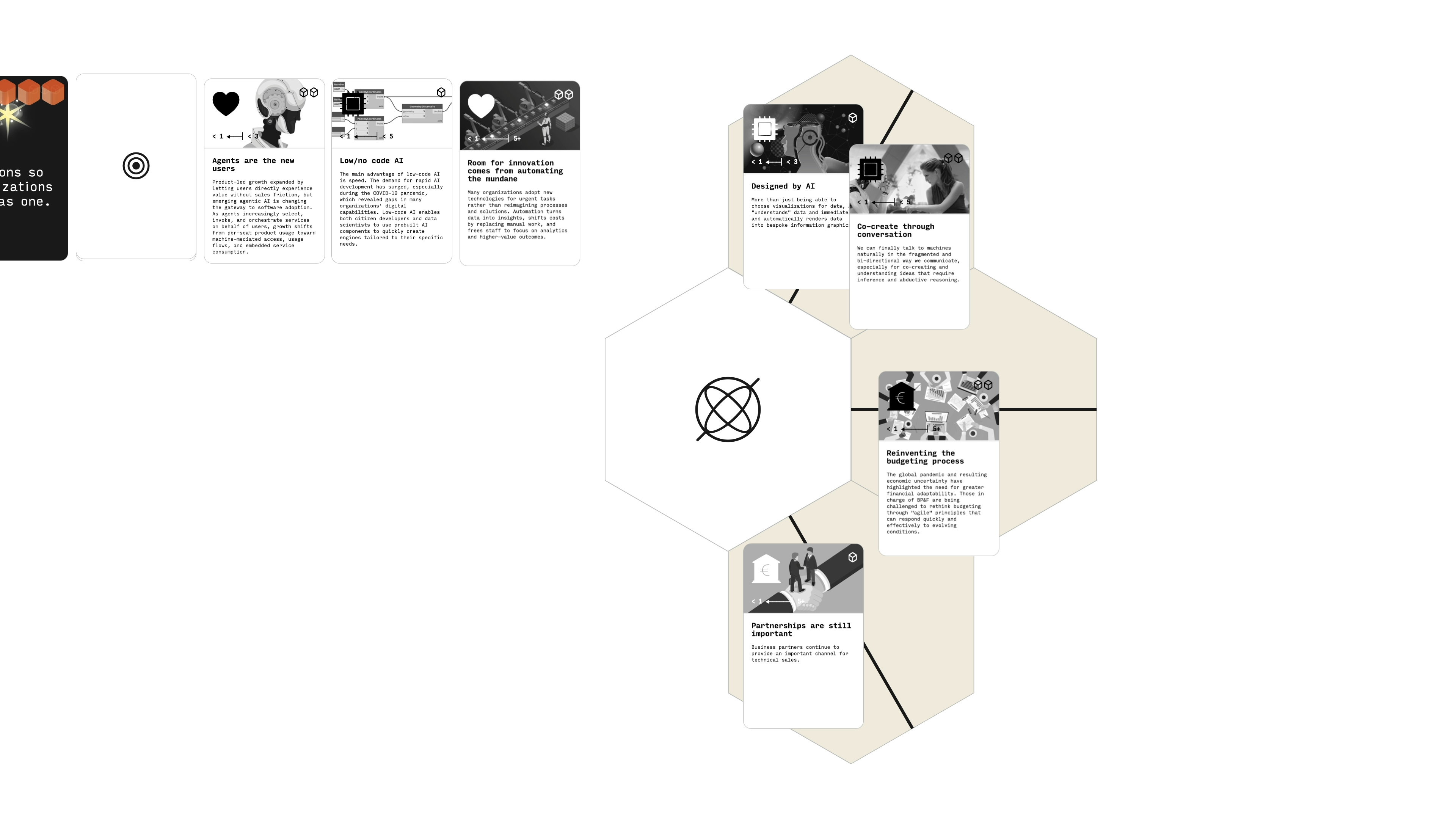
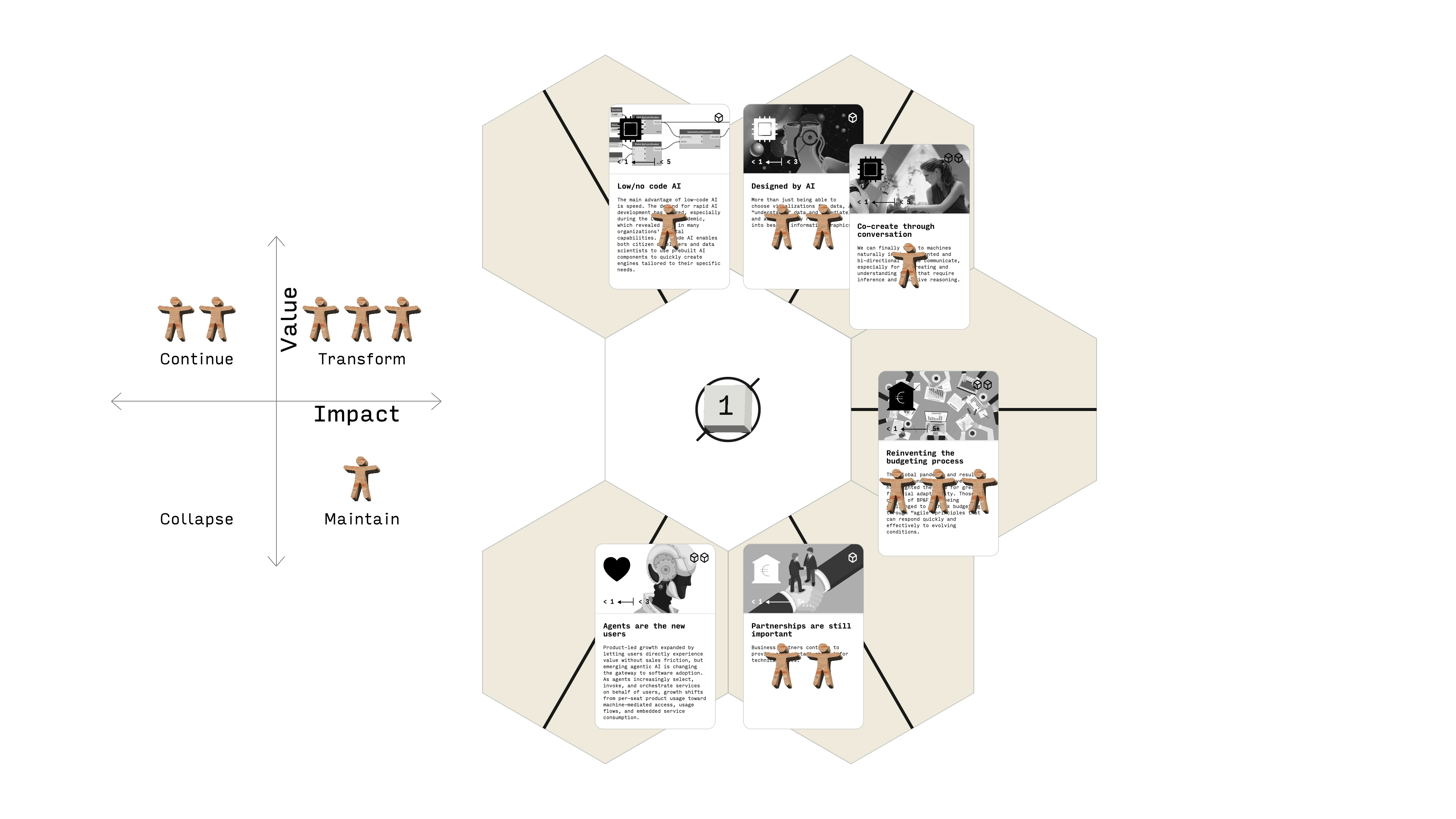
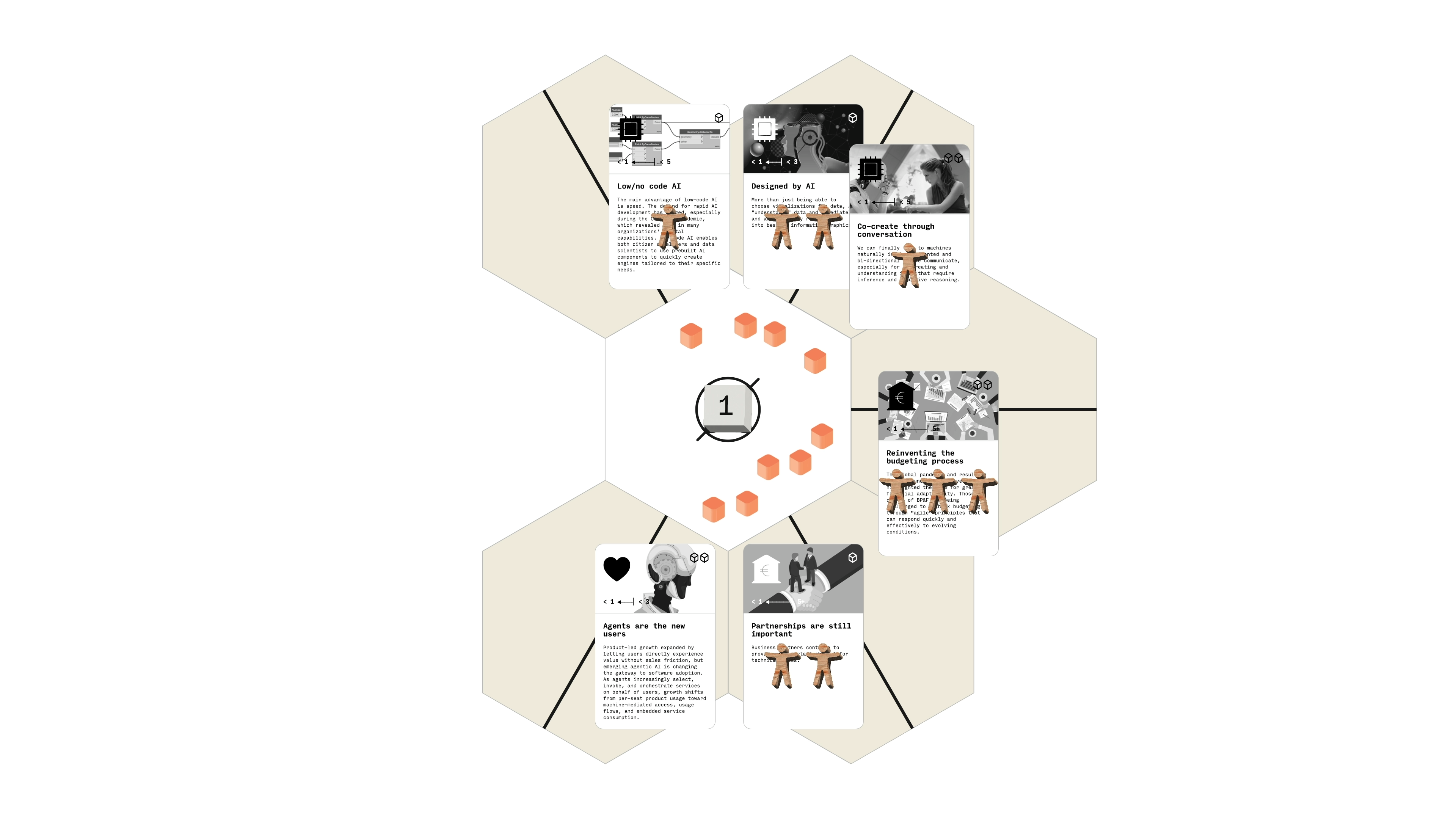
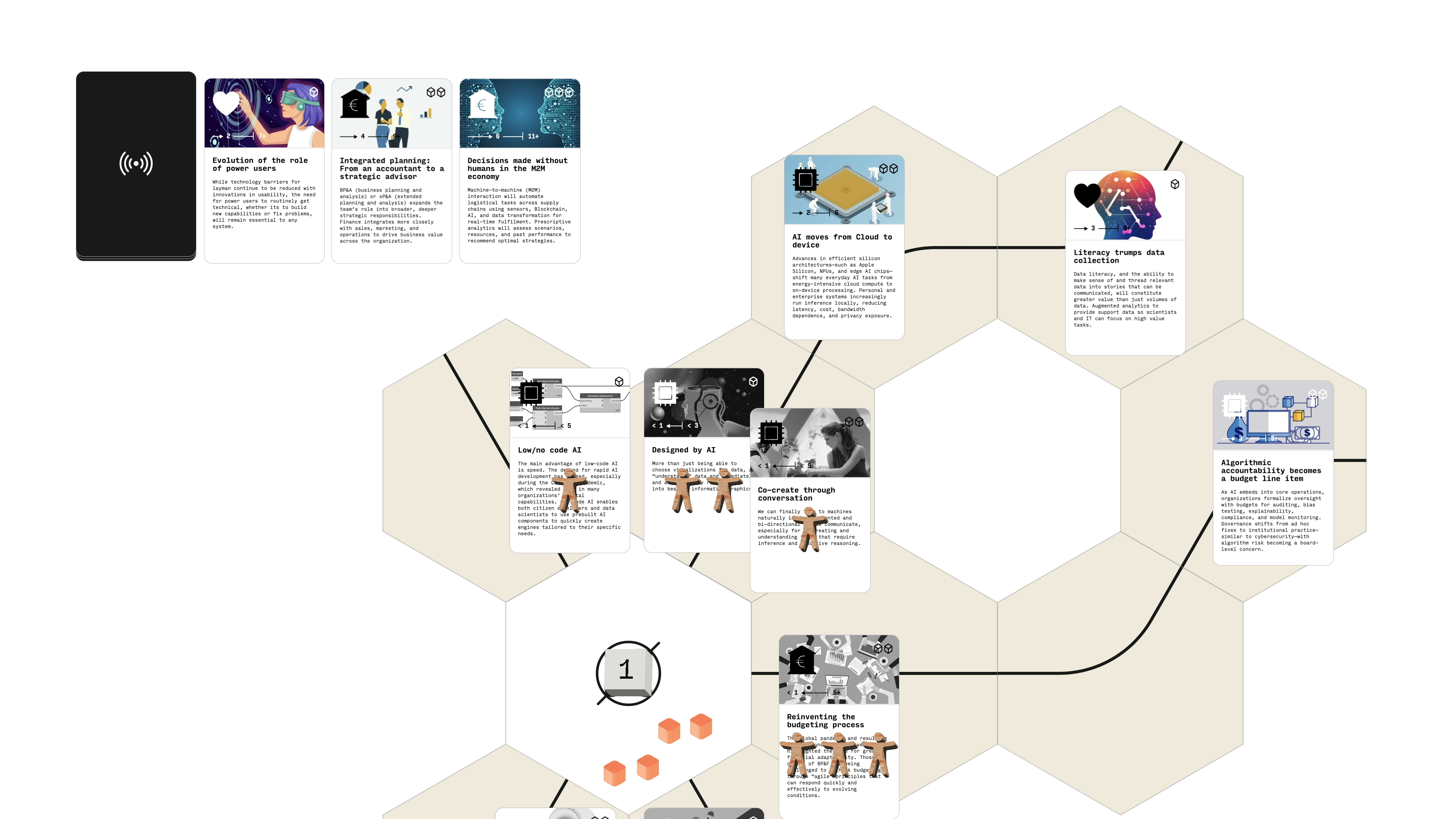
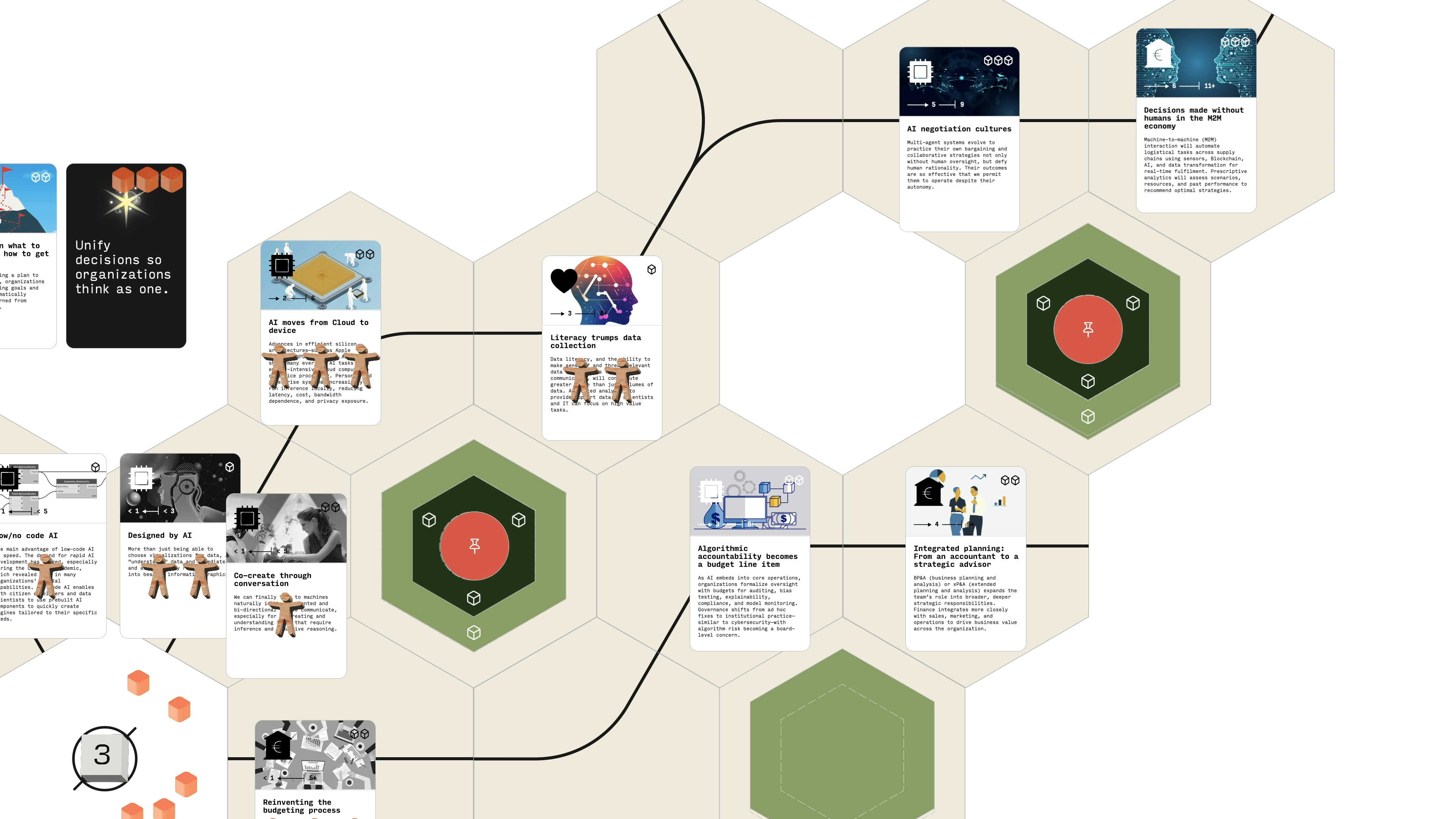
Our action futures framework is facilitated either in-person or on a shared digital canvas, using structured components that participants engage with collaboratively to activate dialogue, surface assumptions, and make causality explicit.
The engagement progresses through five deliberate stages, each designed to build on the last—moving from surfacing today’s realities to clarifying how and where to act.
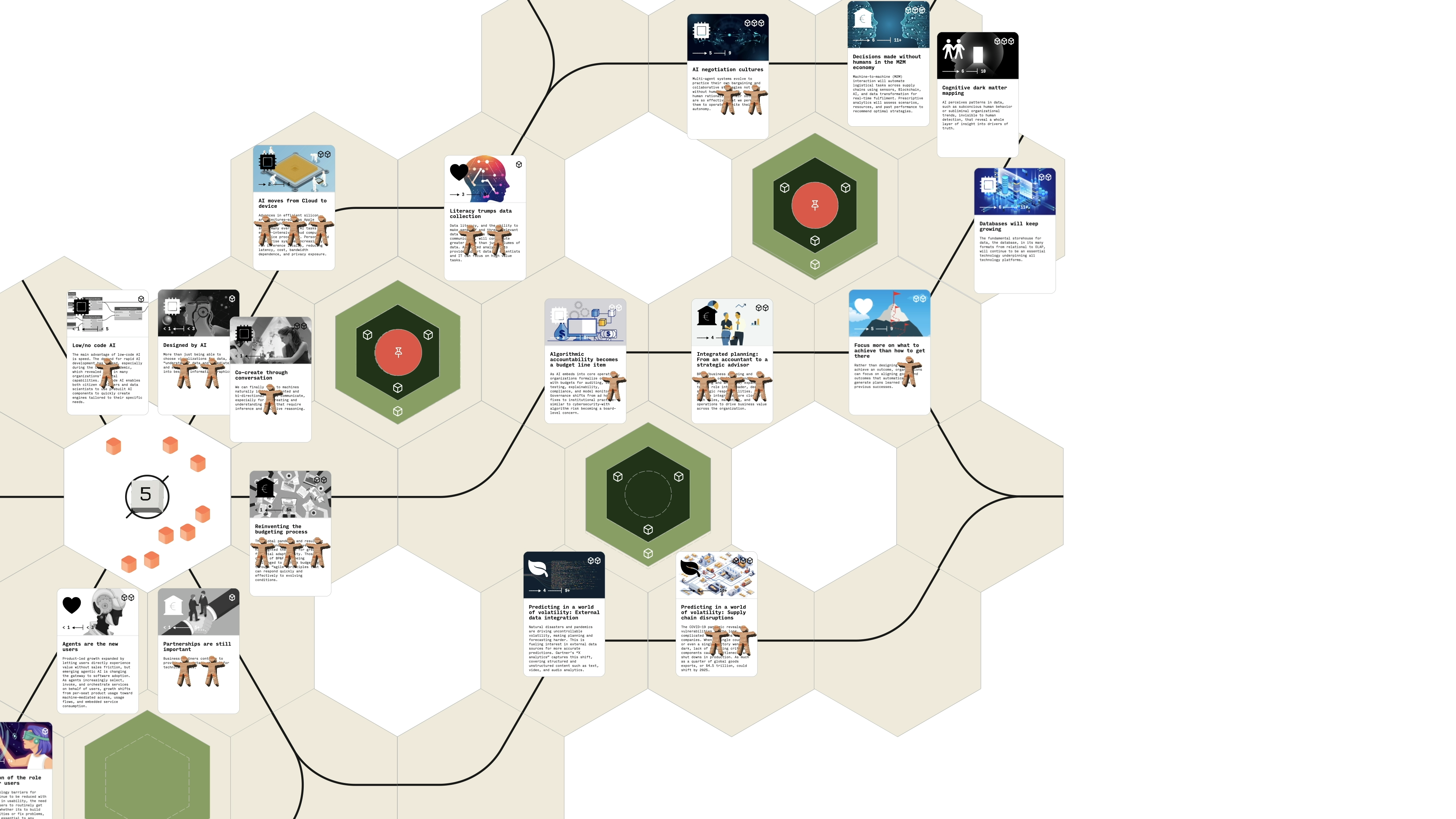
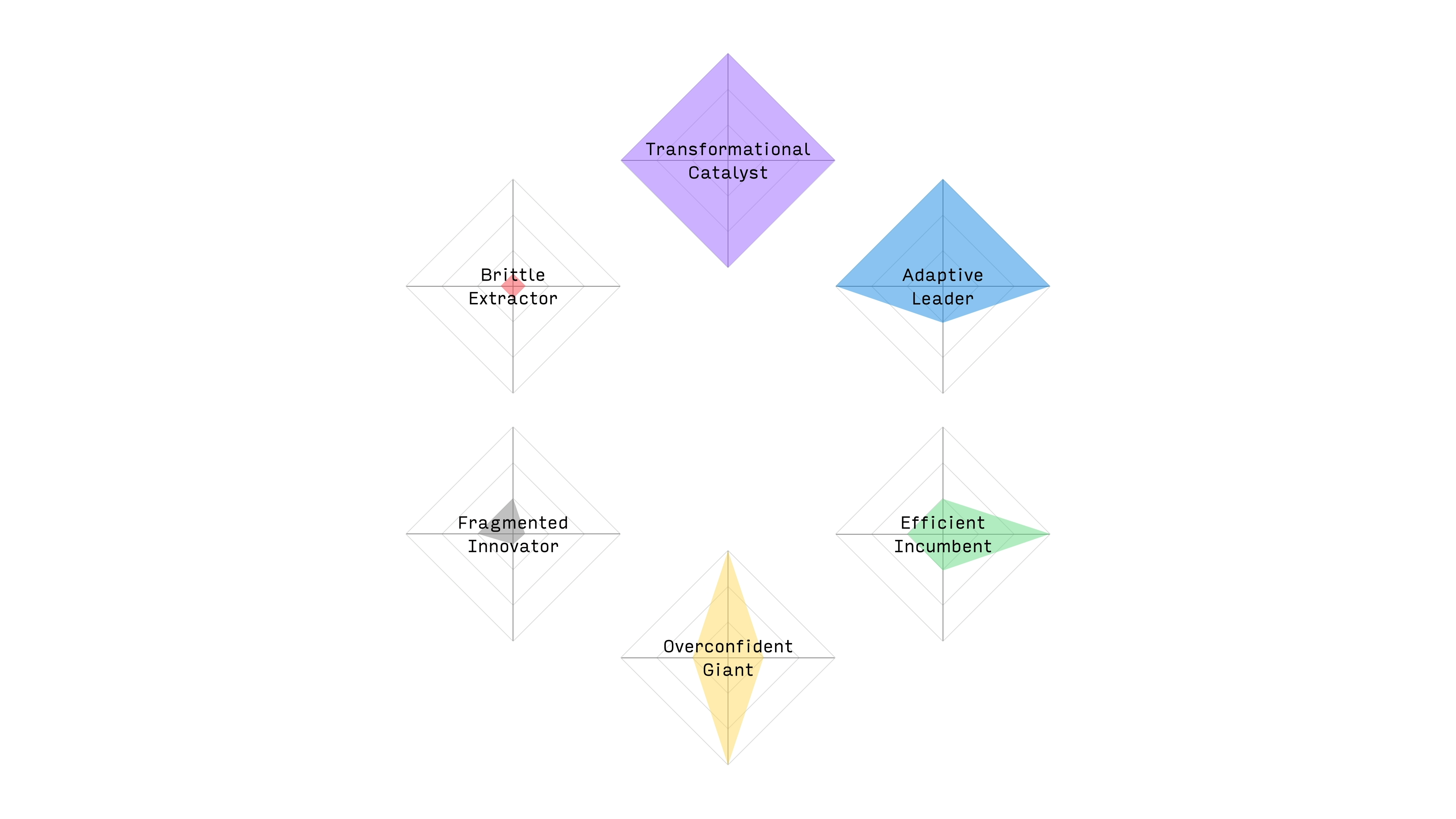
Watch the framework in actionThe Action Futures Framework activates decision rehearsal for leadership teams through cooperative game mechanics that reveal organizational value, confidence, alignment, and impact, while navigating uncertain futures. |
|||||
|
|
|
|
|
|
- What are we betting on today?
- Surface current assumptions, active investments, time-to-market pressures, and exposure to uncertainty—including where capital, effort, and attention are already committed.
- Purpose: Frames reality, not intention.
- Are those bets aligned with where the system is moving?
- Progressively assess emerging signals across STEEP-V dimensions, implications for customer pain-gain dynamics, and plausible future conditions. Examine where current assumptions remain valid—and where they begin to drift from emerging realities.
- Purpose: Challenges relevance without triggering defensiveness.
- How do our decisions perform under change?
- Test the impact of strategic choices across multiple conditions to evaluate adaptability, resilience, and second-order effects as constraints and forces shift.
- Purpose: Rehearses decision behavior.
- Do we share a coherent view of risk and reward across horizons?
- Compare perspectives across near-, mid-, and long-term horizons to reveal misalignment, trade-offs, and implicit risk postures.
- Purpose: Makes disagreement visible—safely.
- What do we adjust now, and what do we hold deliberately?
- Translate insight into clear strategic intent: What to reinforce, what to adapt, what to pause, and what to actively monitor—with explicit rationale and shared ownership.
- Purpose: Converts learning into agency without forcing premature decisions.
Core outcomes
|
Ready for applied futures ›